What Is the Difference Between Preschool and Daycare?
posted on Nov 06, 2026
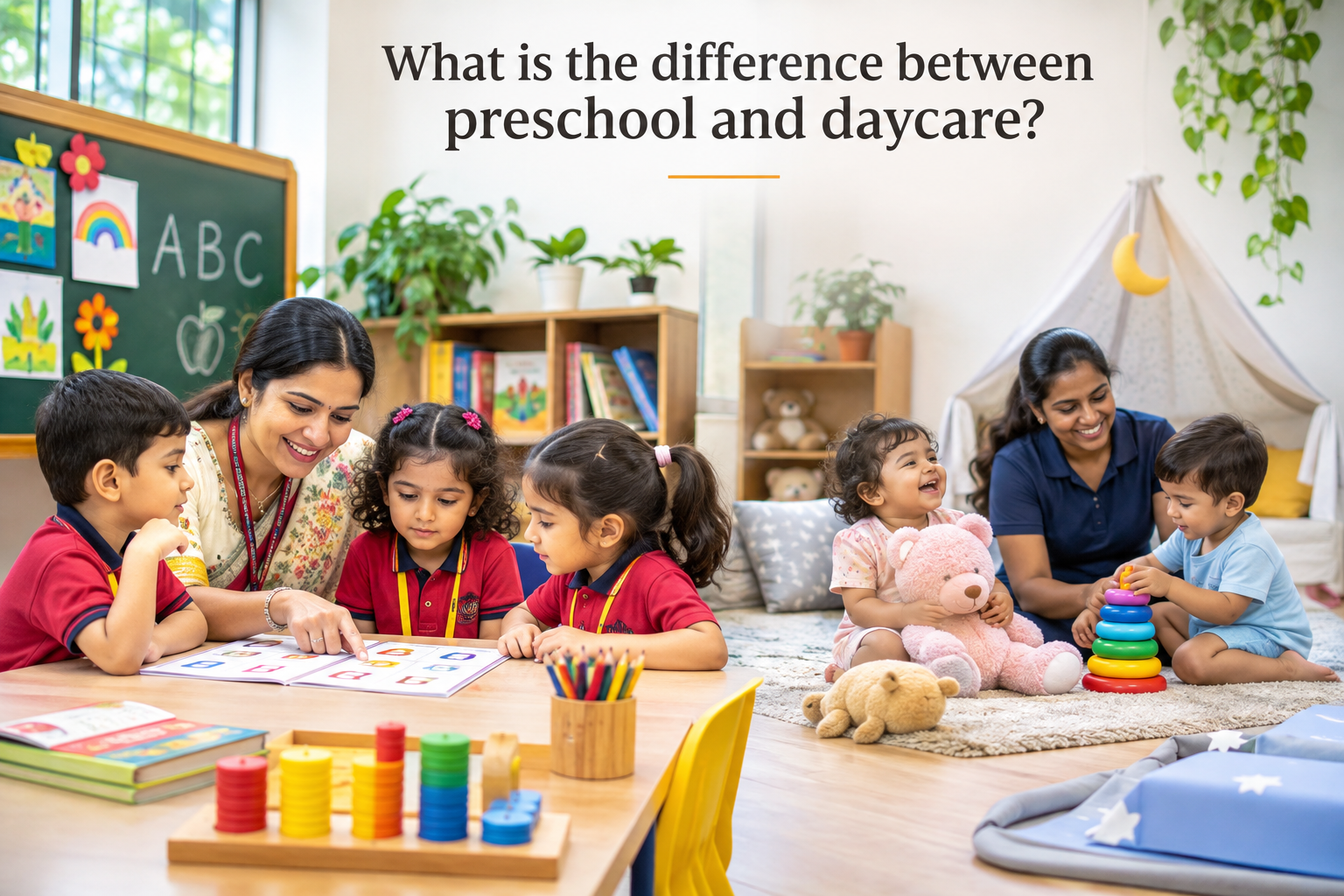
Parents comparing play schools in Delhi often see “preschool” and “daycare” used as though they mean the same thing. They serve different primary purposes. Preschool focuses on early learning through play, conversation, stories and group activities. Daycare focuses on keeping children safe, cared for, and engaged while parents or guardians are unavailable. Some centres provide both, which is why the programme matters more than the name on the signboard.
Preschool vs Daycare: What Actually Changes?
A preschool usually follows a planned learning routine. Children might listen to stories, sort objects, draw, sing, practise taking turns, and explore numbers or sounds in age-appropriate ways. The aim is not to rush formal academics; it is to develop communication, curiosity, independence and confidence.
Daycare generally offers care across a longer part of the day. Depending on the centre and age group, routines may include meals, naps, free play, outdoor time and supervised activities. Learning can happen there too, but the central service is dependable care.
Hours and age eligibility vary widely. Preschool programmes often run for shorter sessions, while daycare may accommodate earlier drop-offs or later pick-ups. Neither term guarantees a particular timetable, age range, or qualification.
Which Is Better for a Two-, Three- or Four-Year-Old?
The answer depends on the child and the family's daily routine, not just age.
For a child who enjoys short group experiences but does not need full-day care, a play-based preschool may suit the family. For parents requiring supervision during working hours, daycare may be more practical. If both needs apply, ask whether a centre offers structured preschool activities alongside extended care.
For younger children, prioritise responsive adults, predictable routines, rest and opportunities for movement. Older preschoolers may benefit from more group play, language-rich interactions and simple problem-solving tasks. A longer day is not automatically a better learning experience.
How Should Parents Compare Centres in Pitampura?
When visiting schools in Pitampura or nearby early-years centres, observe what children are actually doing. Are adults speaking respectfully to them? Is there enough time for child-led play? Do children have suitable spaces to rest, eat, and use the washroom?
Ask about the daily schedule, caregiver-to-child arrangements, safety procedures, staff training, illness policies, and how parents receive updates. Check whether preschool and daycare groups have different routines. A centre advertising both services should explain what each includes.
While comparing play schools in Delhi, confirm the exact hours and how the centre handles late pick-ups, holidays, and emergencies. These practical details can matter as much as learning activities.
Does Preschool Prepare Children for Grade 1?
Preschool can build foundations for later schooling, especially listening, speaking, self-help skills, cooperation, and comfort in a group. It should not be treated as a race to finish primary-school worksheets.
Parents searching for a Grade 1 school in Pitampura should check the receiving school's age eligibility, admissions procedure, and expectations independently. Attending a particular preschool does not necessarily guarantee a place in Grade 1.
Similarly, searching for a top school in Pitampura may help create a shortlist, but it does not replace seeing how an institution supports children at their current developmental stage. Families considering HRM Global School can use its official admissions contact to verify relevant classes, programme details, and current procedures rather than relying on assumptions.
Can a Daycare Also Offer Good Early Education?
Yes. Quality depends on staff interactions, activities and the environment, not the label alone. A daycare may offer excellent play-based learning; a preschool may also offer extended care. Ask for a sample timetable and notice how much time is spent on free play, guided activities, meals, and rest.
The best option is one that meets your child's needs and your family's schedule without sacrificing safety, warmth, or developmentally appropriate experiences.