Nursery Admission in Pitampura: How to Spot a Good Early Learning Environment
posted on Oct 27, 2026
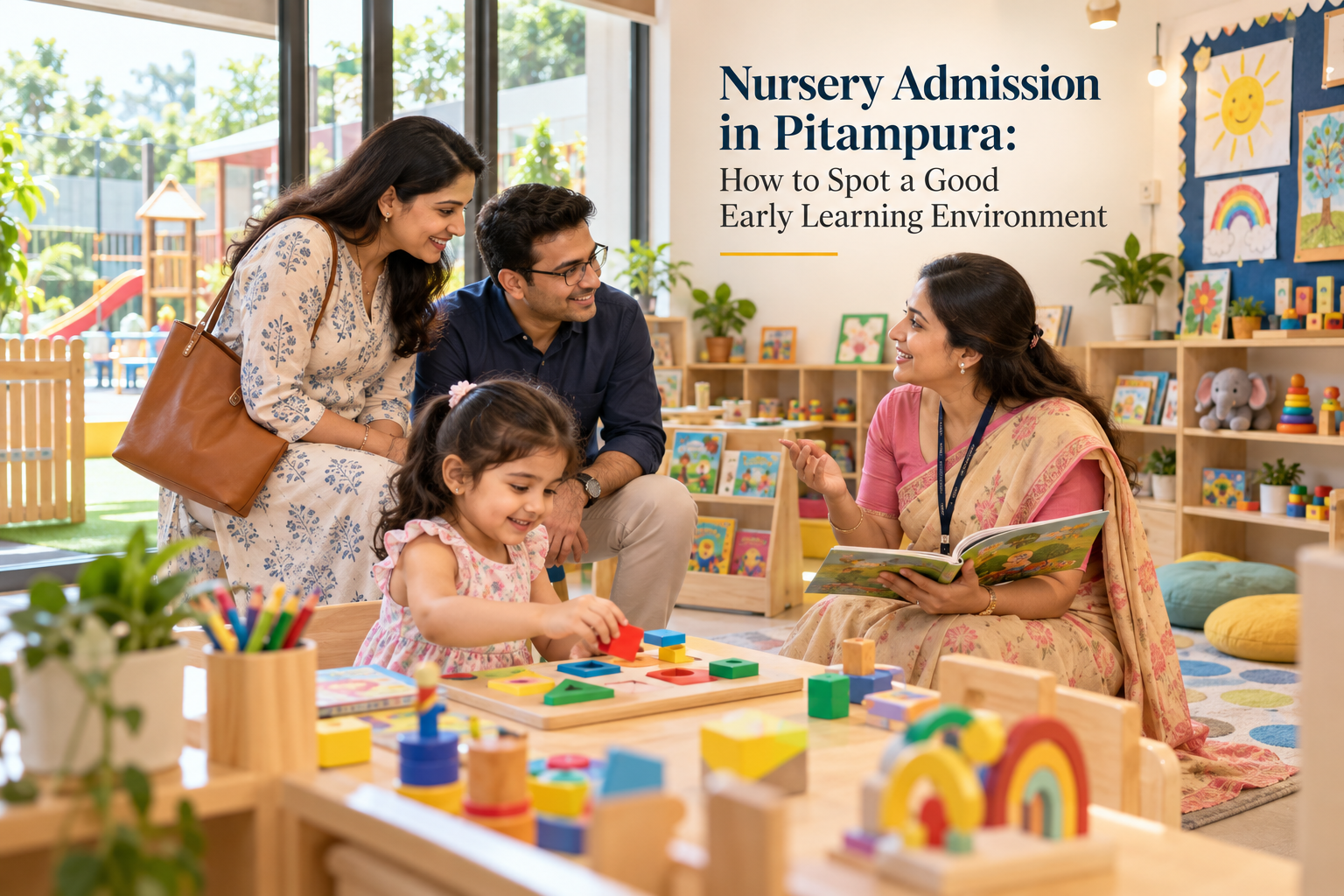
A good nursery shows itself in small details: children's own messy artwork on the walls, low shelves they
can reach, teachers sitting on the floor with them, and a day that mixes play, stories, movement and
rest. If you're planning nursery admission in Pitampura, these signs tell you far more than a brochure or
a polished reception area. At three or four, a child learns mostly through play, conversation and routine,
so the environment itself does much of the teaching. Here's how to read a classroom in one visit, which
red flags to take seriously and how to get your child ready for the change.
What does a good early learning classroom look like?
Walk in and look at the room from your child's height. Then check for:
- Child-sized everything: low tables, reachable shelves, small toilets and wash basins
- Open-ended materials: blocks, clay, sand, water, paints and dress-up clothes rather than only
battery-operated toys
- Real children's work: drawings that look different from each other, not twenty identical cut-
outs finished by adults
- Defined corners: a book nook, a pretend-play area and a space for quiet time
- Outdoor access: shaded, safe space to run, climb and dig every day
Natural light and fresh air matter too. A cramped, windowless room makes long mornings harder for
young children.
Which signs show the teaching is right?
Watch the adults, not the décor. Good early years teachers kneel to a child's eye level, ask open
questions like "What are you building?" and allow children to finish a task slowly. They read aloud with
expression and let children talk back.
India's National Education Policy 2020 and the NCF for the Foundational Stage both describe this stage
as play-based and activity-based learning. A nursery that hands three-year-olds written homework or
long pencil work is not following that approach, however impressive the worksheets look.
What red flags should parents notice?
- Children sitting silently in rows for long stretches
- Heavy school bags or daily written homework at nursery level
- Teachers who can't tell you what a typical day looks like
- No clear pickup protocol or visitor checks
- Rushed or dismissive answers when you ask about crying, toilet accidents or settling in
- Any test or interview of your child before admission
The last point matters. The Right to Education Act prohibits screening children or parents for admission
at the entry level, so a school asking your child to "perform" is a warning sign.
What questions should you ask during nursery admission in Pitampura?
Most schools in Pitampura Delhi follow the Directorate of Education's admission schedule for nursery
seats, so visits often happen in a short window. Use that time well:
- How many children are there per teacher and per attendant?
- Are teachers trained in early childhood education?
- Who helps children in the washroom, and are female attendants present?
- How do you handle the first two weeks of settling in?
- How and how often will you share my child's progress?
If you're also weighing play school admissions in Pitampura for a younger sibling, the same questions
apply. Early learning quality doesn't change with the label on the gate.
How to prepare your child for preschool
Knowing how to prepare your child for preschool makes the first weeks much smoother. Start a few
weeks ahead:
- Shift wake-up and meal times closer to the school timetable
- Practice short separations with a trusted relative
- Let your child open their own tiffin and water bottle
- Read picture books about starting school
- Walk or drive past the school and talk about it positively
Keep goodbyes short and warm. Long, emotional exits usually make separation harder.
Where does HRM Global School fit in?
HRM Global School is a co-ed, CBSE-affiliated school in Pitampura's PU Block, with classes starting from
nursery. As with any option on your shortlist, visit during a normal school day, observe how teachers
interact with the youngest children and ask the questions above before deciding.
Quick answers for parents
Is it normal for my child to cry in the first week? Yes. Most children settle once the routine feels
familiar. Ask the school how it supports this phase.
Should a nursery teach reading and writing? Not formally. Rhymes, stories, drawing and conversation
build the base that reading and writing grow from later.
Final thoughts
A good early learning environment feels busy, warm and a little noisy, with children choosing, exploring
and talking. Trust what you see in an ordinary classroom over what you hear in a sales pitch, and give
your child a few calm weeks of preparation at home.