How Can a School in North West Delhi Help Children Build Stronger Communication Skills?
posted on Oct 13, 2026
Some kids know the answer and still stay quiet. They look at the floor, mumble, or just say “nothing” when a teacher asks what’s wrong. Other kids talk easily to anyone, from a new classmate to a school guest.
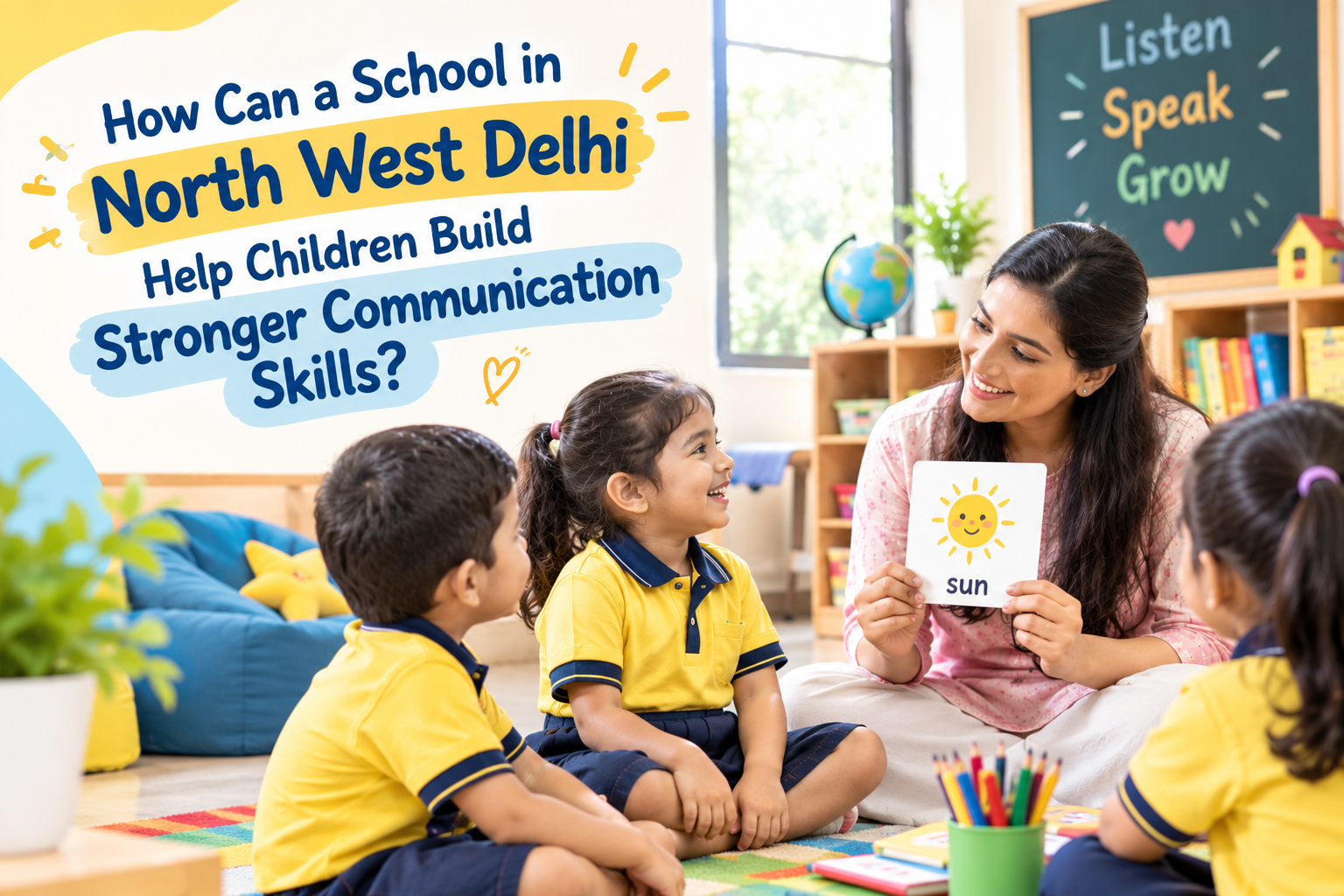
Most parents notice the gap early and wonder what’s behind it. A lot of the answer sits in the place where children spend six or seven hours a day. A good school in North West Delhi doesn’t treat communication as a separate subject. It builds the skill into the whole day.
It starts with being heard
Children speak up when they believe someone will listen. If a teacher cuts a child off or laughs at a wrong answer, that child learns to stay silent. If a teacher waits, nods and says “tell me more,” the child learns that their words matter.
Good schools make this a habit. Teachers ask open questions, give kids time to think, and don’t rush to finish their sentences. It looks like a small thing. Over months, it changes how a child carries themselves.
The early years set the pattern
Communication begins long before a child can write a paragraph. At a good KG school in Pitampura, it shows up in simple, everyday moments. Circle time, where each child shares something. Rhymes and stories acted out with actions. Role play in a pretend kitchen or shop. Show and tell, even if a three-year-old’s talk lasts only ten seconds.
These things look like play, and that’s the point. Little ones pick up vocabulary, sentence building and confidence while they’re having fun. A child who gets comfortable talking in front of ten friends at four is far less nervous in front of forty at fourteen.
Group work teaches what lectures can’t
Talking isn’t only about speaking. It’s also about listening, waiting your turn, disagreeing politely and settling on a plan together. Group projects teach all of that.
When four children build a model or prepare a short presentation, they have to explain their ideas, hear someone else’s, and compromise. Sometimes it gets messy. A child gets upset, another takes over, a third says nothing. Those moments are useful. With a teacher nearby to guide them, children learn to say “I disagree, and here’s why” without a fight.
Reading aloud, debates and presentations
Confidence grows with practice, and practice needs a safe stage. Strong schools give children plenty of chances. Reading aloud in class. Morning assembly speeches. Class debates where every child gets a turn, not just the loud ones. Book talks, where a child tells the class about a story they loved.
Start small. A shy child may begin with one line, then two, then a full minute. Nobody should push them onto a big stage before they’re ready. Steady, gentle repetition does more than one dramatic push.
Language matters too
In a city like Delhi, children move between Hindi and English all day. Good communication means being comfortable in both, and understanding that tone and words change with the situation. You talk one way to a friend on the playground and another way to a principal.
Many of the best CBSE schools in Pitampura put real effort into spoken English and Hindi, not only grammar exercises. Look for schools where children are encouraged to read widely, write their own thoughts, and talk about what they’ve read.
Feelings need words too
Here’s a part parents often miss. A child who can’t name their feelings tends to show them in other ways, like tantrums, sulking or snapping at a sibling. A child who can say “I felt left out” or “I got scared” is already ahead.
Teachers who calmly help children put feelings into words are teaching a life skill. It helps with friendships now and with workplaces, relationships and hard conversations much later.
What parents can look for
When you visit a school, watch for a few things:
- Do children talk freely with teachers, or only answer when asked?
- Are quieter kids given space, or ignored?
- Does the school plan regular speaking activities, such as assemblies, discussions and presentations?
- Do teachers explain, ask questions and listen, or mostly dictate?
You can learn all of this in one visit by simply watching.
Home and school work as a pair
School can do a lot, but it works best when home joins in. Ask your child about their day and let them answer in full. Read together. Let them place their own order at a restaurant. Small habits like these back up everything a good teacher is doing in class.
Finding the right fit
Every child finds their voice at a different pace. A good school gives them time, safety and plenty of reasons to speak.
If you’re exploring options nearby, HRM Global School in Pitampura is worth a visit. Walk through the classrooms, watch how teachers talk with children, and see whether your child could feel at ease there. For families looking at a school in North West Delhi, seeing a class in action says more than any prospectus.
HRM Global School welcomes parents who want to see daily school life up close, so ask questions, observe and trust what you see. A child who feels heard today becomes an adult who speaks up with confidence tomorrow.