How Play Schools in Delhi Help Children Build Social and Communication Skills
posted on Jul 27, 2026
Early childhood is the most formative period in a person's life.
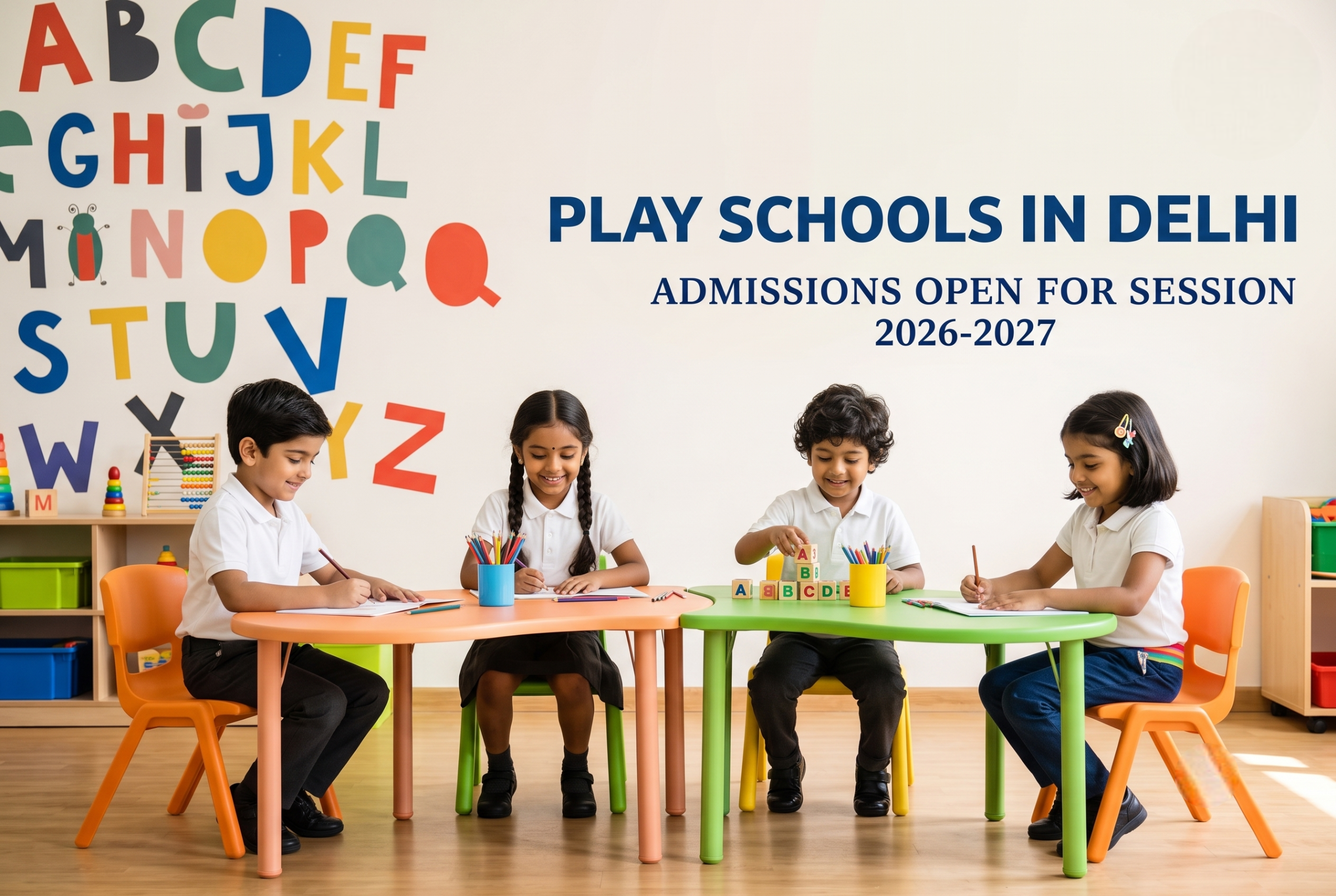
The habits, confidence, and social instincts a child develops between the ages of two and five often shape the way they approach relationships, learning, and challenges for years to come. This is precisely why choosing the right early learning environment matters so much for parents today. Among the many schools in Pitampura Delhi, play schools have emerged as one of the most effective ways to nurture a child's social and communication abilities before they step into formal education.
Play schools are no longer seen as mere daycare alternatives. They are purpose-built learning ecosystems designed around a simple but powerful idea: children learn best when they are having fun.
In this blog, we explore how play schools help children build essential life skills, and why parents searching for the best school in Pitampura Delhi should pay close attention to a school's approach toward social and communication development.
Why Social and Communication Skills Matter So Early
Before children can read or write, they need to know how to express themselves, understand others, share, take turns, and resolve small conflicts. These are not abstract skills — they are the building blocks of emotional intelligence and future academic success.
Research in early childhood development consistently shows that children who develop strong social-emotional skills early on tend to perform better academically, form healthier relationships, and adapt more easily to new environments later in life.
A structured play school setting gives children the opportunity to practice these skills every single day, in a safe and guided space, long before they encounter the more complex social dynamics of a formal classroom.
1. Structured Play as a Learning Tool
The single biggest advantage of a play school is that it uses play as the primary medium of instruction.
When children participate in group games, building activities, storytelling circles, or pretend play, they are unconsciously learning how to:
- Wait for their turn
- Listen to instructions
- Negotiate roles in a game
- Express disagreement respectfully
- Celebrate a friend's success
This kind of learning cannot be taught through worksheets. It has to be experienced, and that is exactly what a good play school environment offers.
When parents are evaluating schools in Pitampura Delhi, it is worth observing how much of the daily schedule is dedicated to unstructured and semi-structured play, rather than rote instruction.
2. Group Activities Build Confidence
Many children, especially only children or those with limited exposure to peer groups, can feel shy or overwhelmed in new social settings.
Play schools address this gradually through group circle time, buddy systems, and collaborative projects like building blocks, art stations, and role-play corners.
Over weeks and months, children who were initially hesitant to speak up in a group begin to raise their hands, share their ideas, and even lead small activities.
This transformation is one of the most visible outcomes parents notice, and it is a strong indicator of a school's quality when researching the best play school in Pitampura Delhi.
3. Communication Skills Through Guided Interaction
Communication is far more than vocabulary. It includes listening, understanding non-verbal cues, asking questions, and articulating needs clearly.
Play schools use several methods to strengthen these areas:
Storytelling and Show-and-Tell: These sessions encourage children to speak in front of a small group, building both vocabulary and public speaking confidence from an early age.
Music and Rhymes: Group singing helps children with pronunciation, rhythm, and listening skills while also teaching them to move and respond in sync with peers.
Puppet Shows and Role Play: These activities allow children to practice conversations, express emotions, and understand perspective-taking in a low-pressure, imaginative setting.
Teacher-Guided Conversations: Trained early childhood educators gently prompt children to describe their feelings, ask for help, or explain what they are doing, reinforcing communication as a daily habit rather than an isolated lesson.
4. Emotional Regulation and Empathy
Social skills are closely tied to a child's ability to manage emotions.
A quality play school does not just focus on academics or activities, it actively teaches children how to name their feelings, calm themselves down, and understand how their actions affect others.
Teachers often use simple tools like feeling charts, breathing exercises, and conflict-resolution conversations to help children navigate frustration, excitement, or disappointment in healthy ways.
This emotional foundation is one of the most underrated benefits of a play school education, and it is something parents should specifically ask about when comparing the best school in Pitampura Delhi for their child.
5. Peer Learning and Diversity Exposure
Play schools bring together children from different family backgrounds, routines, and personalities. This diversity itself becomes a learning tool.
Children learn to adapt to different communication styles, understand that not everyone thinks or plays the same way, and build tolerance and patience — skills that are increasingly important in today's interconnected world.
Why HRM Global School Stands Out in Pitampura
Among the many institutions offering early childhood education in the area, HRM Global School has built a strong reputation for combining structured learning with a warm, play-based approach.
The school focuses on age-appropriate activities that are specifically designed to strengthen both social confidence and communication ability, supported by trained educators who understand the developmental needs of young children.
What sets HRM Global School apart is its emphasis on individual attention within a group setting — ensuring that every child, whether naturally outgoing or a little reserved, gets the encouragement they need to participate, express themselves, and grow.
The school's classrooms are designed to encourage interaction, curiosity, and collaborative play, making it a strong choice for parents specifically looking for the best play school in Pitampura Delhi.
What Parents Should Look for While Choosing a Play School
When evaluating schools in Pitampura Delhi, here are a few practical questions parents should ask:
- How much of the daily routine involves group activities versus individual tasks?
- What is the teacher-to-student ratio, and how much individual attention can a child expect?
- Does the school have a structured approach to emotional development, not just academics?
- Are there regular opportunities for storytelling, role play, and group discussion?
- How does the school handle conflicts or shyness among children?
A school that can answer these questions with clarity and confidence is likely to offer the kind of environment where social and communication skills genuinely flourish.
Conclusion
The early years of a child's life are not just about learning letters and numbers — they are about learning how to connect with the world around them.
Play schools play an irreplaceable role in this journey, using structured play, guided interaction, and emotional support to help children become confident communicators and empathetic individuals.
For parents in the area searching for the right start to their child's educational journey, exploring reputed schools in Pitampura Delhi, and considering institutions like HRM Global School, can be a meaningful first step toward giving their child a strong social and communicative foundation for life.